The first time I watched a client’s shoulders drop as they walked into their revamped backyard, I realized the pool was only half of the story. Yes, the water should sparkle, but it is the landscape architect’s orchestration of sightlines, textures, shade, and circulation that transforms a swimming pool into a place people cannot wait to come home to. In North Texas, where summer heat stretches for months and evenings often invite outdoor living, the difference between a basic build and a resort-style retreat is the landscape strategy wrapped around the water.
Dallas has no shortage of builders. A good Dallas Pool Builder can execute a design well, and several Dallas Pool Companies earn their reputations with engineering and service. The projects that feel timeless, however, usually start with a Dallas Landscape Architect leading the vision and working shoulder to shoulder with a Dallas Pool Contractor. When that collaboration clicks, the results look cohesive on day one and still feel right ten years later.
What “Resort-Style” Really Means Here
Resort-style means more than a long tanning ledge and a swim-up bar. It is the choreography of space so you can move from sun to shade, from open water to intimate corner, without a second thought. Resorts create confidence; they keep you oriented. You know where to sit with a coffee and where the dinner conversation happens. In Dallas, this has to happen within the reality of the site. Soil expands and contracts, stormwater comes heavy when it comes, and evenings can turn in a heartbeat from blazing sun to a welcome breeze. The resort you want in Highland Park will not look or perform like the one in Frisco or Southlake.
I think in layers and thresholds. Water is the focal point, but what frames it, what filters light, how you approach it on bare feet, that is where the experience lives. If those elements feel inevitable, it means the design decisions were right.
Start With the Land, Not the Water
The fastest way to a costly regret is to sketch the pool shape first and hope the rest will follow. A landscape architect starts upstream: property survey, topography, soils report, drainage paths, tree survey, and how the sun arcs across the lot in July versus January. Those are not clerical details. They drive every decision.
- The site’s grade and the house’s finished floor elevation determine deck heights, steps, wall heights, and where water wants to go when it rains. If your backyard falls even 18 inches from the back door to the fence, you can use that drop to create a negative edge or a low sunken lounge that feels private without a tall wall. In expansive Dallas clay, structure matters. We collaborate with a structural engineer to spec a pier-and-beam pool shell, often using drilled piers on a grid that might range from 8 to 12 feet apart depending on soils. This is invisible insurance against movement and cracked coping. Mature oaks and pecans are assets and constraints. Their root zones affect pool placement, trenching paths, and irrigation layout. I would rather shift a spa two feet than harm a tree that took decades to mature. Proper root-pruning and air-spading, done by an ISA-certified arborist, is cheaper than replacing shade. Sun and wind are the uncredited designers. We model shadows on equinoxes and at summer solstice so that the primary lounge gets morning light and afternoon relief. A pergola can do a lot, but placing seating on the east side of the pool is the cleanest way to avoid the 4 p.m. sizzle.
The Role of the Landscape Architect Among Builders and Contractors
A Dallas Landscape Architect is the synthesizer. The Dallas Pool Contractor handles hydraulics, structure, and the build sequence. A Dallas Pool Builder coordinates subs and timelines. Both are essential. The architect ties the project to the land and to the way the household will actually live.
I set the design intent, then write specifications that protect it. For example, if the concept hinges on a paper-thin waterline shadow, the stone selection, coping profile, grout color, and setting bed depth are not casual decisions. If the plan depends on serene water movement, pump sizing and return placement get tuned to prevent surface chop. Small oversights compound. Catching them on paper saves weeks in the field.
On luxury projects, a team might include a structural engineer, MEP engineer for outdoor kitchens and lighting loads, and a low-voltage specialist for controls. A Luxury Pool Builder DFW will have those relationships. Architecture thrives with a good cast.
Structure and Engineering That Disappear Beneath the Aesthetic
Every resort-style pool hides its strength. When we talk about the glamour of a vanishing edge, what makes it work is a precisely built weir wall, usually laser-leveled within a tolerance of about one-sixteenth of an inch. The catch basin must have correct volume to handle bather surge and wind chop, or the edge burps and stains. If the site gets leaf litter, we might widen the trough and use removable grates for maintenance, or install a debris canister downstream so you are not on your hands and knees every weekend.
Decking is similarly engineered. In Dallas clay, I favor a reinforced concrete sub-slab, typically at least 4 inches thick with rebar, under stone or porcelain decking. Movement joints need to align with the pool shell’s expansion joints. Miss that alignment and you will see random cracks telegraphing through beautiful limestone.
We talk a lot about materials; we should talk as much about assemblies. A porcelain plank that feels cool underfoot owes its performance to the mortar choice, the grout joint, the drainage plane, and whether the slab was pitched at 1 to 2 percent away from the house. When a storm drops 2 inches of rain in an hour, water will find flaws. A well-built resort-style space does not panic. It sheds and recovers.
Shaping Space With Levels, Light, and Edges
Unforgettable backyards rarely sit flat. Even on a pancake lot, I create vertical interest with seat walls, planter heights, and subtle changes in deck elevation. A six-inch step can define a lounge without blocking views. A 12-inch raised beam topped with slab coping doubles as casual seating and visually contains the water. If the lot has a slope, a split-level arrangement can make the pool terrace feel like an outdoor room, with soft grade transitions to lawn or planting.
Lighting is where many projects lose their nerve. Path lights alone make a backyard look like a runway. Resorts feel layered. I typically combine:
- Subtle in-water LEDs focused on walls or sun shelves for a gentle glow, not a nightclub. Downlights from trees or pergolas to mimic moonlight and avoid glare. Accent lights grazing stone or planting to model texture and form.
Warm white in the 2700K to 3000K range flatters skin and stone. RGB color has its moments for parties, but day to day, most clients keep it at warm white. Dimmable zones let you dial the scene for weeknight quiet or a Saturday dinner.
Edges matter. A knife-edge perimeter overflow can be sublime, but it is not for every site. Wind exposure, tree litter, and budget can turn perfectionist details into maintenance headaches. Sometimes a simple, well-finished coping and a subtle skimmer line outperform a fussy edge. Judgment comes from building enough to know what will age well with the household’s habits.
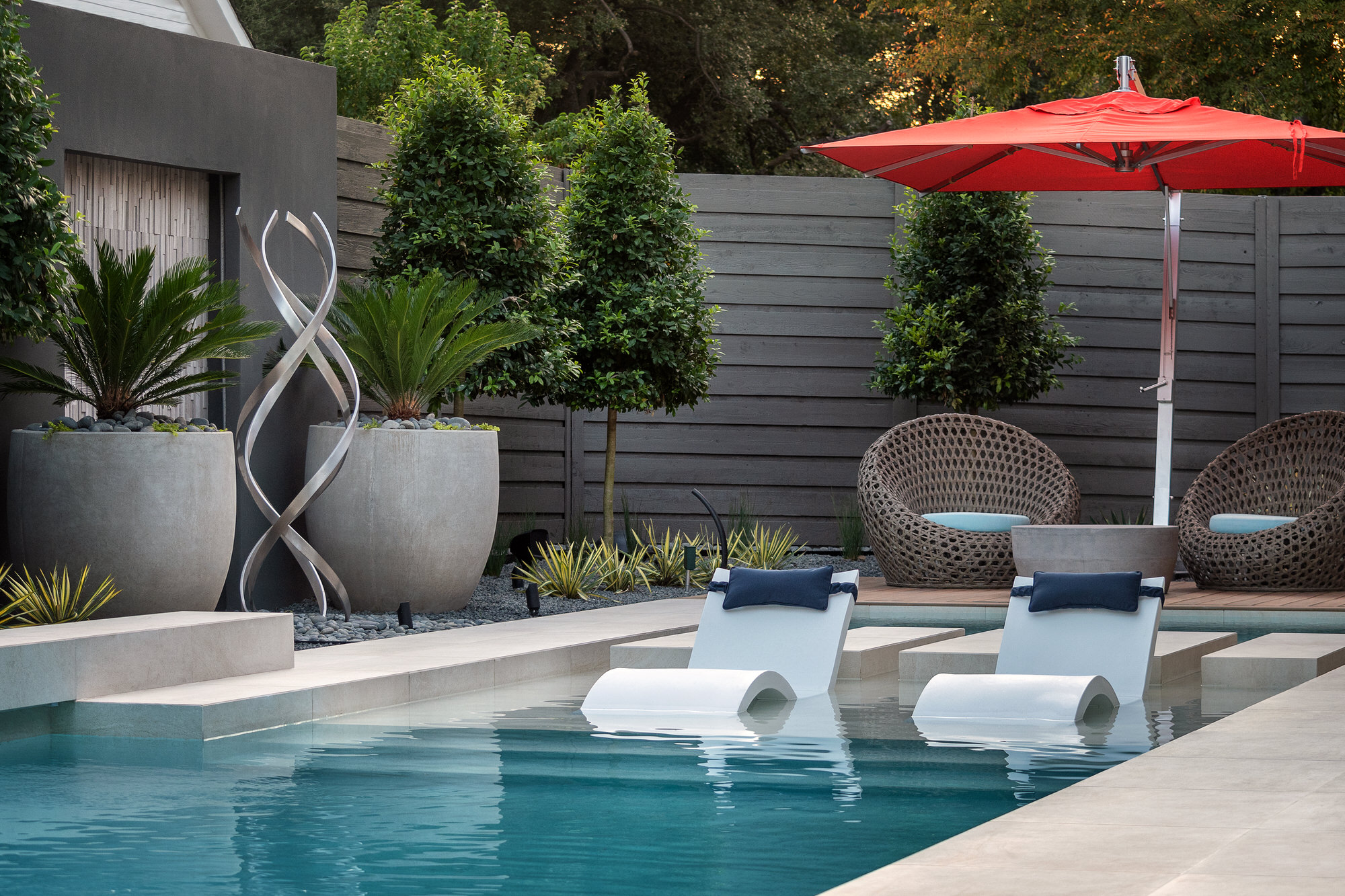
Material Choices That Beat the Heat and the Calendar
Dallas summers punish materials. Skin does not forgive hot surfaces. Stones vary wildly in thermal comfort, water absorption, and maintenance. A few guidelines I lean on:
- Porcelain pavers with textured finishes stay cooler than many stones and shrug off staining. The key is specifying tiles with enough thickness and a rating for exterior freeze-thaw, then setting them on a mortar bed rather than a pedestal system when you need absolute stability at the water’s edge. Dense limestones and travertines can work, but test a wet sample in full August sun. Some lots see surface temperatures that push deck materials above 130 degrees. Shaded studies and misting systems can help, but material choice sets the baseline. Waterline tile should be a workhorse. Glass looks glamorous, but not all glass is created equal. I look for tiles with beveled edges that mitigate mineral deposits and recommend automatic fill valves and consistent water chemistry to reduce scale. For walls and raised features, select stone that tolerates intermittent saturation. Cap those walls with drip edges to prevent the dreaded stalactites of efflorescence.
I will trade a showy slab for a durable finish that still looks good after five Dallas summers. Clients rarely regret low-maintenance elegance.
Planting That Cools, Screens, and Softens
Planting gives the pool its context. It also solves problems you would rather not handle with architecture. Want privacy from a two-story neighbor? Plant layered foliage rather than building a 10-foot wall. Want to soften a long rectilinear pool? Use rippling grasses or an asymmetrical grove to break the line.
For Dallas microclimates, I design with a palette that tolerates heat, periodic drought, and occasional ice:
- Structural evergreens like magnolia ‘Little Gem,’ Japanese yew, and holly cultivars provide year-round bones without constant litter. Ornamental trees such as Vitex, desert willow, and Mexican plum bring seasonal bloom with light leaf drop. They cast dappled shade instead of heavy debris. Grasses like Gulf muhly and little bluestem move in the wind, catch low lighting beautifully, and need minimal water once established. Succulents and architectural perennials, from agave to hesperaloe, punctuate modern compositions and do not beg for attention.
I avoid plants that shed constantly over the water or attract bees to seating areas. Citrus in containers can be magical near a kitchen, but keep them just outside the splash zone to preserve fruit and foliage. Irrigation must be zoned carefully; turf, beds, and tree zones have different needs. Drip reduces evaporation and overspray on hardscape, and pressure-compensating emitters keep flows even on long runs.
Comfort Systems That Earn Their Keep
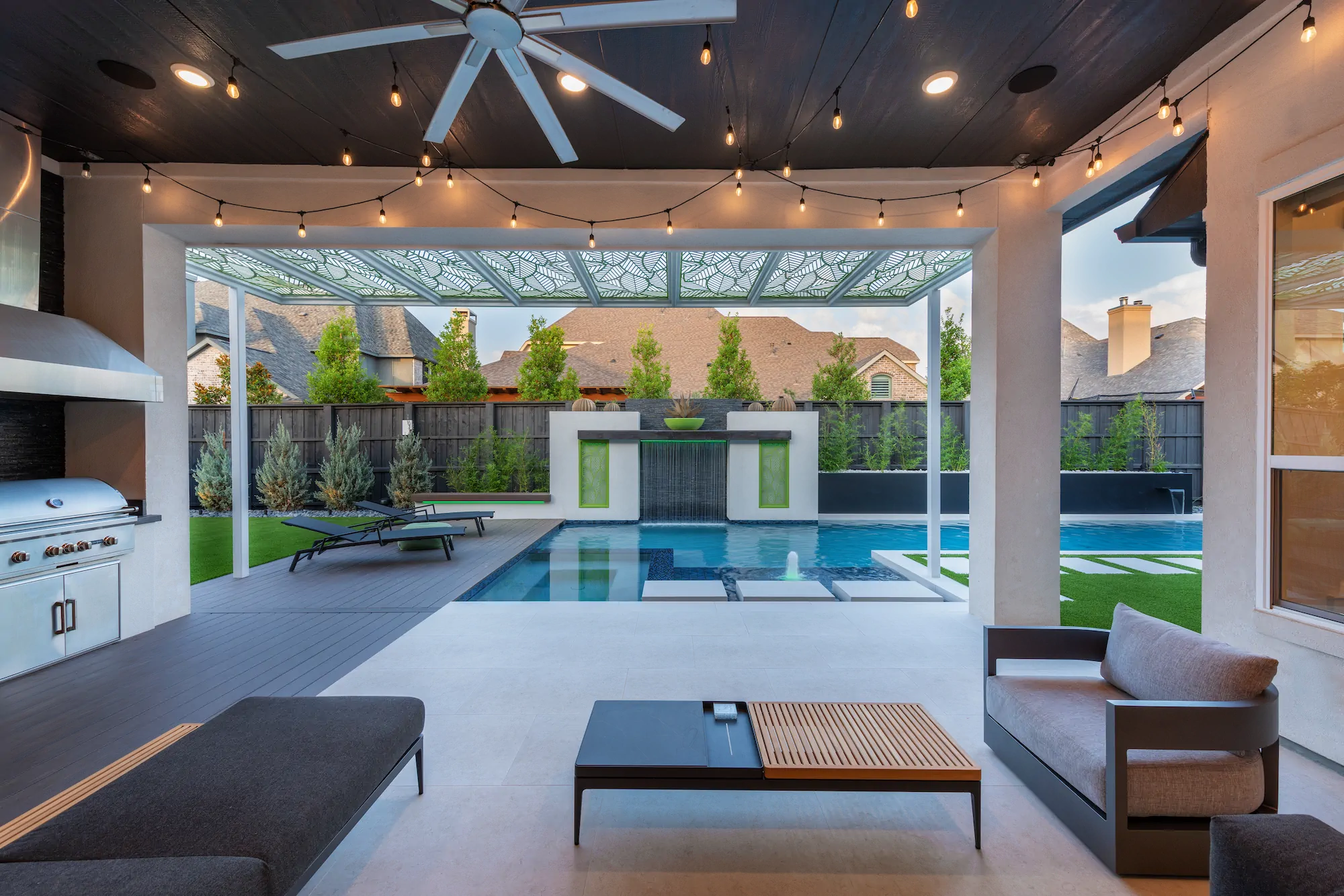
Shade wins in Dallas. A pergola with an adjustable louvered roof might add 20 to 40 percent to your shade budget compared to a simple arbor, but it buys more usable days and protects outdoor kitchens. When I add infrared heaters to a covered lounge and orient it to block north winds, my clients use that space into December.
Water features are a judgment call. A 24-inch sheet fall looks crisp on day one, but if the site gets mineral-heavy spray or wind, maintenance rises. I often recommend narrow scuppers that pulse a thinner stream. They read as elegant, are less prone to staining, and resist crosswinds better. Bubblers on a sun shelf delight kids and double as white noise that masks traffic.
Automation is worth it, but it needs to be curated. App-controlled pumps, lights, and heaters make life easier as long as the routing and wireless signal are robust. Hardwire where you can. Label everything. An elegant control panel that anyone can understand beats an exotic system nobody wants to touch.
Working Around the House, Not Against It
The backyard must dovetail with the home’s architecture. A midcentury ranch wants long, low lines, larger-format paving, and restrained planting. A Mediterranean revival invites textured stone, arched cues, and drought-tolerant formality. Even with a strong concept, I study the home’s window alignments and roof pitches so the pool axis feels inevitable.
Sightlines from interior rooms matter. If the kitchen window frames the spa, keep the equipment pad or skimmers out of that sightline. If the primary bedroom looks over the deep end, give it a distant focal point, perhaps a specimen live oak uplit against a wall, so the eye travels.
Sound management is often ignored. Compressors, pumps, and heaters can hum. I tuck equipment behind masonry, add acoustic fencing, or leverage a detached garage corner to break up noise. Neighbors and sleeping children appreciate that detail more than any Instagram feature.
Budget as a Design Tool
Resort-style does not require reckless spending. It requires ranking what matters. For many families, the hierarchy looks like this: structural integrity, shade, comfortable decking, lighting, then special features. Extras can follow in phases. I have staged projects over two to three years: shell and primary deck first, then pergola with fans and heaters, then outdoor kitchen or fire elements. Phasing keeps quality high.
Costs in DFW vary with access, soils, and scope. A simple gunite pool with basic finishes might start around the mid-six figures. Add a spa, high-end decking, a shade structure, outdoor kitchen, lighting, and planting, and you can double or triple that. Honest budgets let a Dallas Pool Contractor price appropriate equipment and let a Dallas Landscape Architect design details you can actually build.
The Process That Keeps Momentum and Quality
A clear sequence makes projects smoother and preserves design intent. Here is the one I use most often:
- Discovery and analysis, including survey, soils, and utilities mapping, followed by a design brief that captures how the household wants to live outdoors. Concept design and 3D massing to test scale, sightlines, and sun. We edit ruthlessly here rather than in the field. Technical drawings and engineering, including pool structure, decking assemblies, drainage plans, lighting circuits, irrigation zoning, and planting plans with sizes and quantities. Competitive or negotiated pricing with a trusted Dallas Pool Builder and coordinating trades. We tighten allowances to prevent late-stage substitutions. Permitting, HOA approvals, and pre-construction meeting to align on access, staging, and protection of trees and existing finishes. Construction with scheduled quality checkpoints: steel and plumbing inspection pre-shotcrete, waterproofing tests, tile and coping mockups, lighting aiming sessions, and planting review. Commissioning and owner orientation. We walk the site at dusk to tune dimmers and angles, review automation settings, and schedule maintenance.
That last part matters more than people think. A resort-style space thrives on small routines: cleaning filters, checking chemistry, flushing irrigation, and sealing stone as needed. A little attention keeps it looking new.
What Children, Dogs, and Parties Teach You About Design
Real life challenges theory fast. Kids treat a sun shelf like a stage. Give them room and a bubbler they can control, and they will invent games you never imagined. Dogs rocket along edges. Build steps with generous treads and rounded noses so paws land easily. Parties migrate toward where the light and sound feel inviting. If the music is only on the far patio, guests will cluster there and ignore your beautiful lounge. Balance the audio and lighting so people naturally spread out.
Those observations shape details: a secondary outdoor shower near the lawn to rinse grass off feet before reentering the pool, hose bibs tucked at corners for quick cleanups, and gate hardware that closes quietly so nights stay calm.
Common Pitfalls and the Alternatives
I see familiar mistakes:
- Oversized spas shoved into corners. Better to integrate a spa as a jewel within the main composition, perhaps with a low spill into the pool so conversation flows across zones. Decks with too little shade. Fabric sails or umbrellas can fill gaps, but a well-placed pergola or a freestanding grove of small trees does the work more gracefully. Equipment undersized to save money. That economy unravels when turnover rates lag, water clouds, or heating takes forever. Size pumps and filters for reality, not best-case. Reliance on turf to fill space. Use planting beds and groundcovers to reduce heat, water use, and maintenance. Turf has its place, just not in great swaths where nobody plays.
Good design anticipates maintenance and behavior. You should not need to micromanage the space for it to look good.
Case Sketches From the Field
A Preston Hollow lot sloped 22 inches across the buildable area. Rather than heavy retaining, we created a two-tier terrace: pool and shelf on the upper level with a 12-inch raised beam, then three wide treads down to a dining court framed by grasses and a steel-edged rill that doubles as stormwater conveyance. The rill moves rainfall to a bio-swale behind screen plantings, where it infiltrates rather than flooding the neighbor. That client later said the sound of water after storms became their favorite part.
In Lakewood, a narrow yard demanded restraint. We ran a 38-foot lap lane along the fence with a single band of coping and planted a linear grove of ‘Muskogee’ crepe myrtles offset from the pool’s axis. At night, downlights pool installation read like moonlight broken by leaves. The effect was less pool-in-yard and more canal-in-garden. Maintenance is minimal, and the owners swim nine months of the year with a low-profile cover.
A Frisco new build pushed for spectacle: a large tanning shelf, pergola lounge, and a kitchen with a pizza oven. We portioned the budget by prioritizing a louvered roof and high-efficiency heaters, then specified porcelain throughout to keep decks cool. The showpiece became a 14-foot bench carved into the raised beam, cushioned and shaded, where everyone ended up without being told. Function outperformed flash.
Sustainability That Feels Luxurious Rather Than Preachy
Efficient can look indulgent. Variable-speed pumps save power and let us tune water movement to match mood. LED fixtures use a fraction of the energy and offer better control. Planting less turf and more natives cuts water use and amplifies the garden’s presence. Rain sensors and smart irrigation stop waste. Permeable joints or gravel bands at edges let heavy Dallas rains recharge soils rather than sending everything to the street.
I like to hide these moves in plain sight: a rain chain feeding a planted basin, a cistern under a deck that tops off planters, or a bioswale that reads like a dry streambed until a storm animates it. Guests see beauty; the homeowner sees lower bills and less fuss.
When to Bring in the Team
If your dream includes more than a rectangle of water, start with a Dallas Landscape Architect. Then bring a trusted Dallas Pool Contractor to the table early. The synergy produces better fees and fewer change orders. A reputable Dallas Pool Builder and the right subs will make the engineering quietly heroic, so the place feels effortless.
Ask to see built work that is at least three years old. Walk the decks. Look for cracked grout, stained stone, and splotchy planting. Talk to past clients about communication, schedule, and how the team handled surprises. The glossy photo tells only the first chapter.
Living With It
The best compliment I hear is that a family uses their backyard in small ways every day. Morning laps, a ten-minute coffee in the shade, homework at the outdoor table, dinner near the water when a breeze moves. A resort-style retreat is not a showpiece you dust before parties. It is a landscape that makes ordinary days feel a little slower and a lot more intentional.
That feeling comes from hundreds of intentional decisions, many of them invisible, pulled into harmony by a design that respects the site, the climate, and the people who will wander barefoot across it. In Dallas, where the sky is big and the seasons are bold, that harmony turns a pool into a destination and a yard into a way of life.